NCC this week participated in a Food Safety and Inspection Service (FSIS) public meeting to discuss practical strategies for reducing Salmonella illnesses attributed to poultry products. The meeting focused on stakeholder input on how to address Salmonella through better use of data, alternative performance standard parameters, and policy options that reflect both public health goals and industry realities, especially for small and very small producers.
“We believe that technological advancements now allow us to focus on how much Salmonella is present on poultry, rather than merely its presence,” said Ashley Peterson, Ph.D., NCC senior vice president of scientific and regulatory affairs, in her comments.
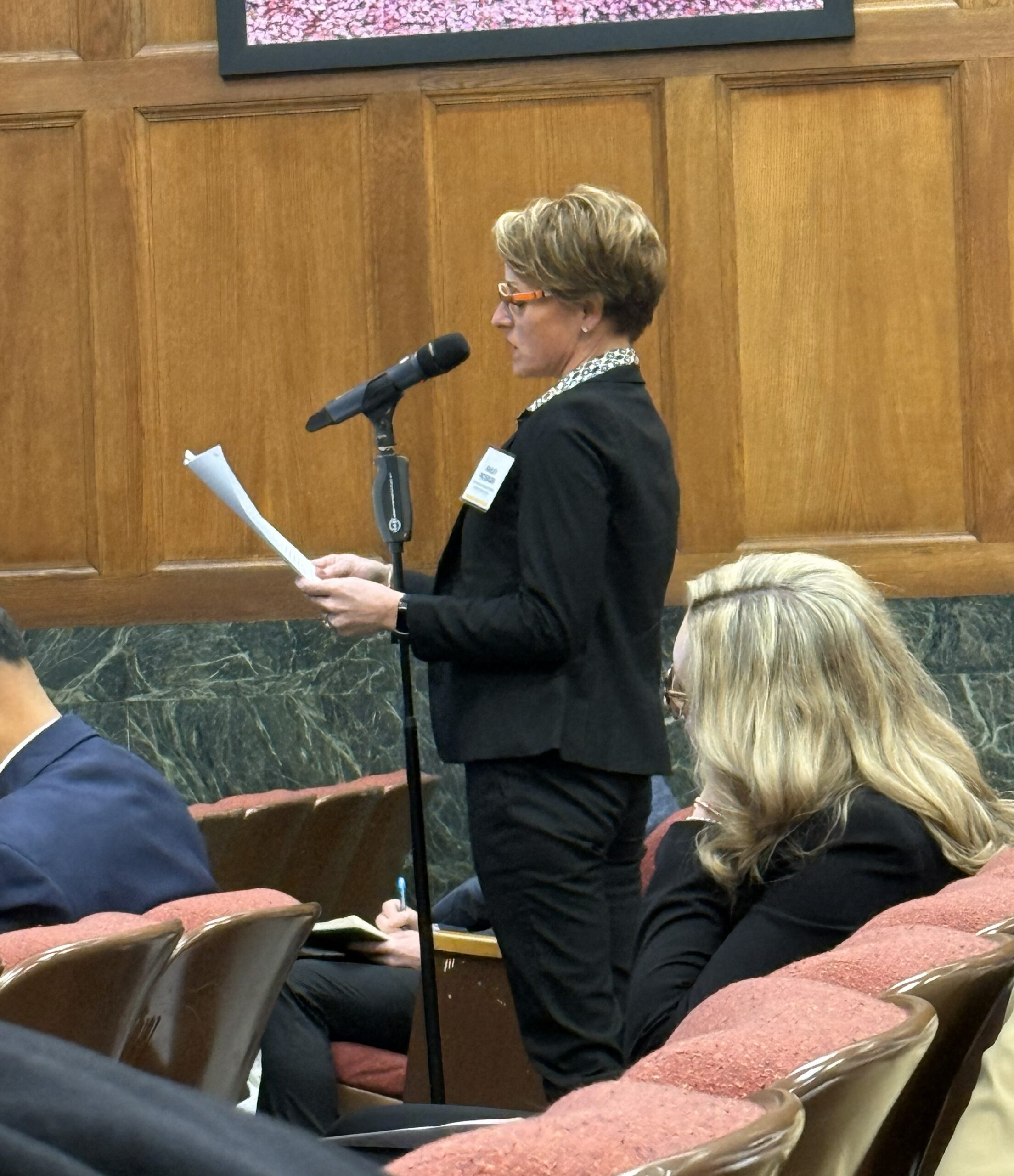 She referenced recent work by the Agriculture Research Service that has demonstrated a high rate of false positives using commercially available methods, including the current FSIS method. “That said, FSIS still has valuable information that should be used to update current standards to enumerative-based performance standards.”
Peterson noted that industry experts and academia have evaluated available FSIS data and are confident that the adoption of an upper and lower enumerative threshold for Salmonella would have an impact on public health.
“Both upper and lower thresholds must be based on scientifically valid data that is operationally reliable, reproducible, and fair,” she added.
NCC also strongly recommended that the Agency reconsider the current 52-week window as it does not reflect current performance of an establishment. A 13-sample window would ensure that establishments not sampled as frequently are treated equally by FSIS and more accurately reflect an establishment’s current performance.
“Product testing alone will not make food safer – what really matters is how well the plant controls its processes to prevent contamination in the first place while product testing demonstrates that process control measures are working,” Peterson said. “We believe that process control – based on microbial data and sanitary dressing – is an essential element of an updated regulatory structure for Salmonella.”
Peterson noted that NCC supports regulations to further reduce Salmonella in poultry products that are science-based, data-driven, implementable by establishments of all sizes, impactful to public health, and keeps poultry products affordable.
“We look forward to partnering with FSIS to advance these and other food safety efforts, and we will provide more details in our written comments,” she concluded.