This Memorial Day weekend, NCC honors America’s military men and women who lost their lives in service to our country. We will never forget their sacrifices to ensure the United States remains the land of the free.


House passes E15 legislation

On May 15, 2026, in Ethanol, by Tom Super

WHAT HAPPENED: The House on Wednesday passed a bill, by a 218-203 vote, to allow year-round sales of higher ethanol blends, known as E15. The measure garnered support from 122 Republicans, 95 Democrats and one independent. The biofuel bill was rejected by 90 GOP members and 113 Democrats. A total of nine lawmakers didn’t vote.  

BACKGROUND: Sales of E15, a fuel blend with 15 percent ethanol and 85 percent gasoline, have been typically restricted for parts of the year because of smog concerns, though President Trump has used executive action to allow E15 sales this summer.

THE MAIN STICKING POINT: The objections center around the economic ripple effects of language that would change how the Environmental Protection Agency handles small refinery exemptions (SREs) from national biofuel-blending rules under the Renewable Fuel Standard. The SRE provision also faces objection from independent refiners who say it would lead to burdensome compliance costs and put union jobs at risk.

WHAT’S NEXT: The bill faces some stiff opposition in the Senate. Some Republican senators from oil-producing states have vowed to oppose the bill, underscoring the challenges it faces in the upper chamber, where legislation must meet a 60-vote threshold to advance.

WHAT THEY’RE SAYING: “I oppose a year-round E15 mandate. That’s what’s currently under debate,” said Sen. John Barasso (R-WY). “I oppose it because it hurts small refineries and all of the people around the country who work in these small refineries.”

“In truth, ‘E15,’ as it is known, is the ethanol lobby’s Trojan horse to expand one of the most costly and destructive federal mandates in U.S. history: the Renewable Fuel Standard. Without reforms to the underlying rule, the E15 expansion entrenches a hidden gas tax, drives up food and fuel prices, slashes vehicle efficiency, threatens refining jobs, and undermines American energy dominance.” — Reps. Scott Perry (R-PA) and Chip Roy (R-TX) in a recent op-ed.

Source: Good in Every Grain


WHAT HAPPENED: Nothing yet. Registration is open for the 2026 Chicken Marketing Summit, scheduled for July 27-29 at Innisbrook Resort in Palm Harbor, Florida. But early bird rates — offering savings of $200 per registrant — end on May 31.

WHY IT MATTERS: The Chicken Marketing Summit is the premier annual conference for poultry marketing and sales executives, bringing together leaders from across the chicken supply chain — from processors and retailers to foodservice operators and allied industry partners. The event is produced by WATT Global Media in collaboration with NCC and remains a member benefit for NCC processor and allied member companies. NCC members also receive $100 off registration. 

WHAT’S ON THE AGENDA: The 2026 Summit will center on the theme “The Protein Moment,” examining how protein-first eating trends, clean-label consumer preferences, and the rise of GLP-1 drugs are reshaping demand for chicken. The conference features 1.5 days of presentations, two evening receptions, and multiple networking opportunities. Confirmed speakers include Kevin Ryan of Malachite Strategy and Research on the GLP-1/high-protein consumer opportunity; Christine McCracken of Rabobank on forces reshaping the broiler industry; Erkin Peksoz of Circana presenting the annual Consumer Chicken Consumption Survey results; and Maeve Webster of Menu Matters on QSR innovation trends, among others.

BONUS INCENTIVE: Registrants before May 31 are automatically entered for a chance to win access to the VIP Hospitality Suite at the 2027 Valspar Championship, also held at Innisbrook Resort. The winner will be announced at the Summit in July.

WHAT’S NEXT: The early bird rate expires May 31. Retail grocery and foodservice executives qualify for complimentary registration with a refundable $150 deposit. The hotel room block at the group rate of $169 per night closes July 7. Register at cvent.me/OyKow8.


NCC this week on social media

On May 15, 2026, in Social Media, by Tom Super

NCC is active on most social media platforms. Follow our accounts on Twitter, Instagram, LinkedIn and YouTube. Here are a few recent posts:


From the archives

On May 15, 2026, in NCC News, by Tom Super

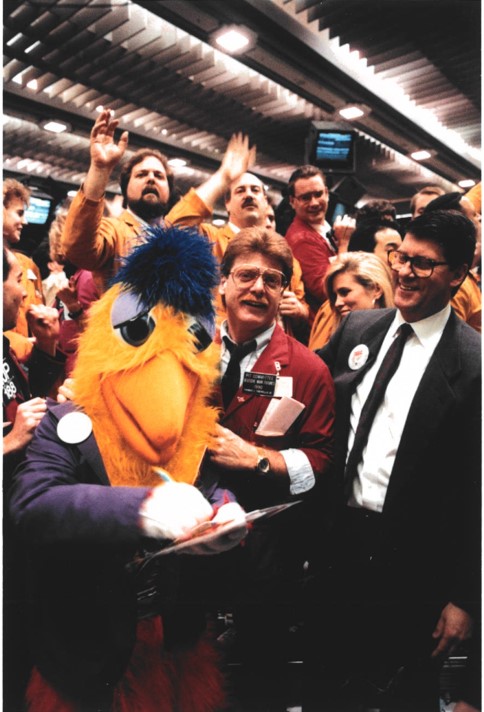
NCC President George Watts (L) with USDA Secretary John Block (C) and Fieldale Farms Co-founder Joe Hatfield (R).  Circa October 1982.


Top broiler producing states announced

On May 7, 2026, in Production, by Tom Super

North Carolina, Georgia, Arkansas, Alabama and Texas were the top five states for liveweight broiler production in 2025, according to USDA’s National Agricultural Statistics Service (NASS). North Carolina reclaims its position from Georgia as the number one producing state by liveweight.

2025 Production (Liveweight/1,000 lbs)

  1. N. Carolina: 8,271,500
  2. Georgia: 8,167,300
  3. Arkansas: 7,790,000
  4. Alabama: 6,628,200
  5. Texas: 5,049,400
  6. Mississippi: 4,697,400
  7. Maryland: 2,093,000
  8. Delaware: 2,025,100
  9. Kentucky: 1,978,800
  10. Virginia: 1,564,900

2025 Production (Broilers/1,000 head)

  1. Georgia: 1,317,300
  2. Alabama: 1,183,600
  3. Arkansas: 1,052,700
  4. N. Carolina: 984,700
  5. Texas: 731,800
  6. Mississippi: 701,100
  7. Maryland: 322,000
  8. Kentucky: 291,000
  9. Missouri: 284,200
  10. Delaware: 263,000

North Carolina edges out Georgia for the top liveweight spot in 2025 (flipping from 2024 when Georgia led), but Georgia still holds the #1 position by head. Louisiana and Florida dropped out of the individually-reported states in 2025 and were folded into the “Other States” combined category. The full report can be found by clicking here.


WHAT HAPPENED: USDA on Thursday published a final rule updating stocking standards for retailers authorized to participate in the Supplemental Nutrition Assistance Program (SNAP). Under the new rule, SNAP-authorized retailers must now carry seven varieties of items across four staple food categories: protein, grains, dairy, and fruits and vegetables.

WHY IT MATTERS: The changes more than double current stocking requirements, place a greater emphasis on whole foods, increase the perishable food requirement, and close loopholes that had long allowed retailers to count certain snack foods toward their staple food minimums. Protein, including chicken, is now explicitly required as one of the four staple food categories retailers must stock. USDA Secretary Brooke Rollins noted that SNAP-authorized retailers accept over $90 billion a year in taxpayer dollars, and the rule is intended to ensure those dollars go toward actual food.

NCC’s TAKE: The House passed the Farm Bill last week with an amendment — by a sweeping 384-35 margin — that would allow SNAP recipients to purchase hot rotisserie chicken, which is currently prohibited under an outdated technicality. As USDA raises the bar on what SNAP retailers must stock and prioritizes real, nutritious, protein-rich food, hot rotisserie chicken is a natural fit: it is affordable, ready-to-eat, and one of the most practical meals a family can bring to the table.

Source: Juanmonino / Getty Images

WHAT’S NEXT: USDA plans to issue additional guidance to retailers in the coming weeks ahead of the Fall 2026 implementation date. Action on the Farm Bill — and the hot rotisserie chicken provision — now moves to the Senate, with the timing unclear.

WHAT THEY’RE SAYING: “This rule puts real food back at the center of SNAP,” said U.S. Department of Health and Human Services Secretary Robert F. Kennedy, Jr. “I thank Secretary Rollins for her leadership in advancing these commonsense reforms. It demands more from retailers and delivers better options for the families who depend on this program. This is how we Make America Healthy Again.”

Source: New York Post


Heard on the Hill

On May 7, 2026, in Farm Bill, by Tom Super

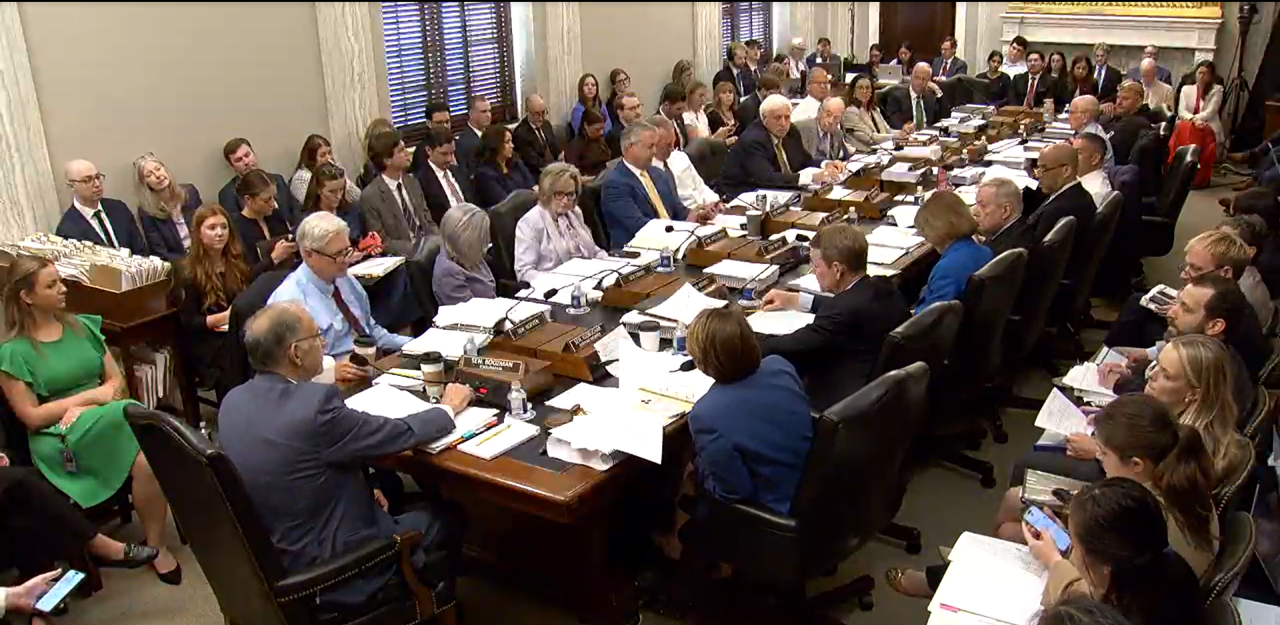
“Because of the filibuster, we need 60 votes to get things passed. We have the opportunity to lose some Republicans, and we have the opportunity to lose a bunch of Democrats. We’ve got to get probably nine, ten or more to vote with us on the Farm Bill. What I’d like to do is take the things where I feel like there is support on both sides and maximize our time building a coalition with those things and get them passed. If you remember, during Reconciliation, we passed about 85% of the Farm Bill.”  — Senate Ag Committee Chairman John Boozman (R-AR)

Sen. Boozman speaks with farm broadcasters at the NAFB’s 2026 Washington Watch (Photo by Brent Barnett/Brownfield)