The European Parliament (EP) this week voted to ban the use of words like “burger” or “steak” to describe their plant-based variants, according to the BBC and other media outlets. The 355-247 majority vote is seen as a victory for livestock farmers who say the labels threaten their industry and livelihoods. A full ban, however, is not imminent – or even certain – as the proposal needs the backing of the European Commission – the EU’s executive arm – as well as the governments of the 27 member countries to become law.
The EU has already defined dairy items as products coming from the “normal mammary secretion”. This includes products like milk, yogurt, and cheese. Oat milk, for instance, is called an oat drink on European shelves.
“Now, we’re not talking about banning vegetable or plant-based alternatives, of course not. But I think that terms should speak for themselves and should mean what they mean,” said Céline Imart, a member of the parliament who led the initiative. She said marketing plant-based products using meat labels “is misleading for the consumer.”
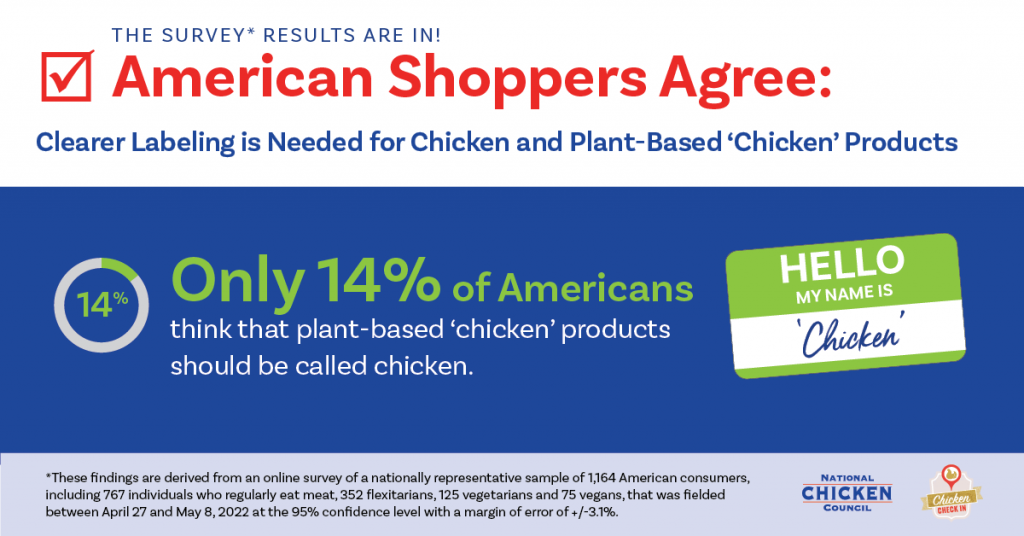
In the U.S., a past NCC consumer survey revealed Americans overwhelmingly agreed there’s a need for:
- Clearer product labeling and;
- Separate shopping sections for plant-based products.
These findings resonated among meat eaters, flexitarians, vegetarians, and vegans alike. More specifically:
- Four in five Americans (81 percent of chicken consumers, along with 86 percent of vegetarians and vegans) want plant-based options to clearly be labeled.
- At least three in five Americans (62 percent of chicken consumers, along with 80 percent of vegetarians and vegans) feel real chicken and plant-based ‘chicken’ should have their own distinct grocery sections at the store to help eliminate product confusion.
- One in five Americans (21 percent) have reported that they accidentally purchased the plant-based product, believing it to be real chicken. Consumers who have experienced such confusion point to plant-based packaging and labeling as imitating those of authentic chicken products too closely.
- Sixty-nine percent of Americans agree the term ‘meat’ should only refer to products made from animals.
- Only 14 percent of Americans think that ‘chicken’ is the appropriate name for plant-based ‘chicken.’