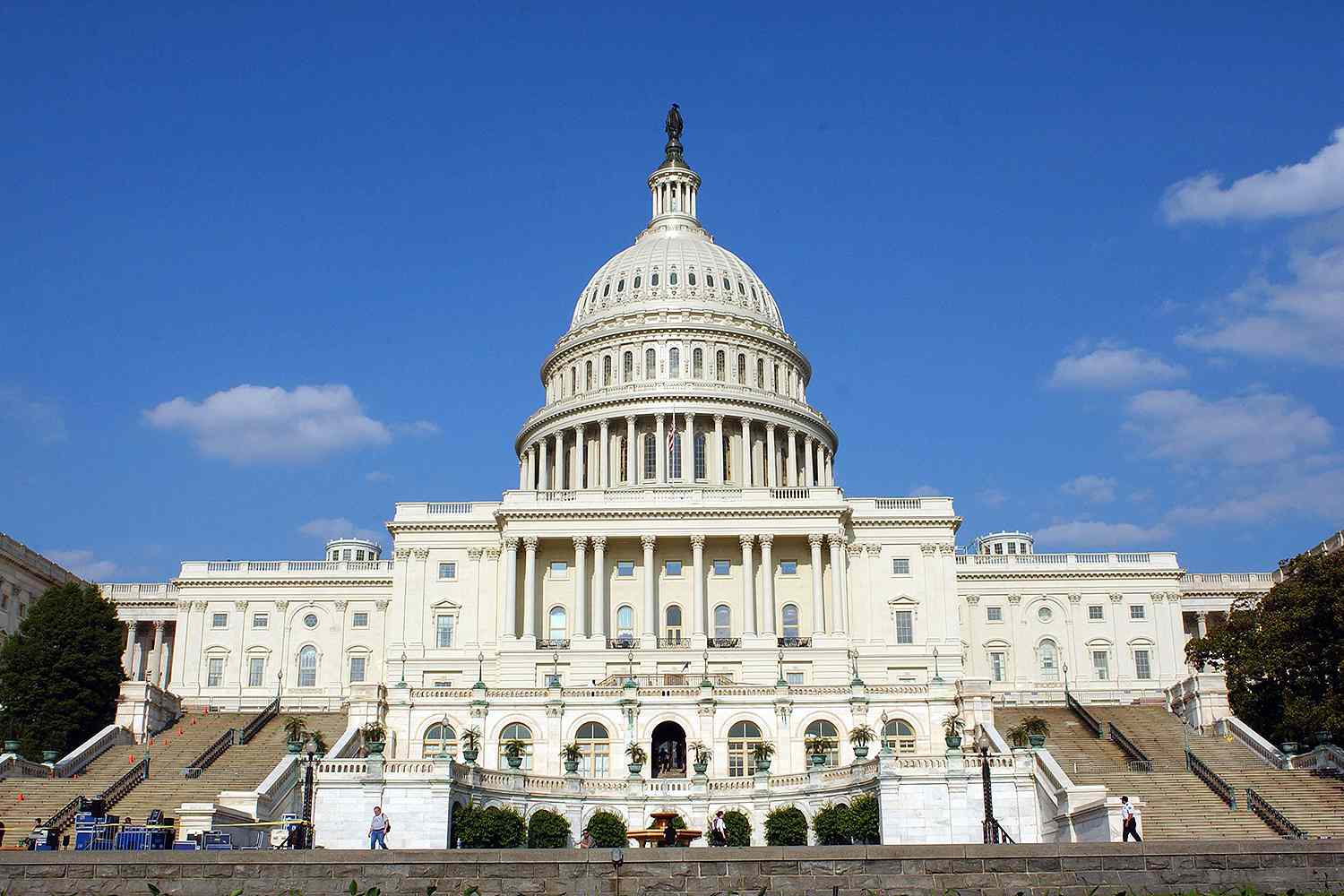
WHAT HAPPENED: The House passed a $95 billion budget reconciliation measure on July 22 by a vote of 216-214. The blueprint would pave the way for reconciliation legislation providing up to $73 billion in additional military funding tied to the conflict with Iran, $12 billion in assistance for farmers, and $10 billion to implement new voting requirements. Three Republicans — Reps. Thomas Massie (Ky.), Warren Davidson (Ohio), and Independent Kevin Kiley (Calif.), who caucuses with Republicans — voted against the measure, joining all Democrats present in opposition.
The package includes the SAVE Act, which would require proof of citizenship to register to vote, impose new photo ID requirements for federal elections, and limit voting by mail. House Speaker Mike Johnson (R-La.) and Vice President JD Vance developed the framework for the measure last week. House Budget Committee Chairman Jodey Arrington (R-Texas) described the military funding portion as supporting near-term readiness needs.
WHAT IS BUDGET RECONCILIATION? Reconciliation is a fast-track process that lets certain budget-specific bills pass the Senate with a simple majority (51 votes), avoiding the 60-vote threshold needed to overcome a filibuster. It starts with a budget resolution setting specific spending targets and directing committees to draft legislation to meet them. Those pieces are then packaged into one final bill. Provisions must have a direct budgetary effect under the Senate’s “Byrd Rule” — policy provisions without a clear fiscal impact can be removed by the parliamentarian.
This is why some senators have questioned whether some, or any, of the SAVE Act’s voting provisions will be included in the final bill.
As a result, the bill includes $10 billion in the form of a grant program, which would be given to states to adopt stricter voter ID measures that are the aim of the SAVE Act. This is designed to be compliant with the Byrd Rule.
This is the third time this Congress that Republicans have used reconciliation to advance a major legislative package. The Senate parliamentarian has already ruled that the SAVE Act cannot be included in a reconciliation package. However, Speaker Johnson has requested a federal fund from which states could draw to implement voter ID and proof-of-citizenship requirements.
SENATE GOP CONCERNS: Several Senate Republicans have raised concerns: Armed Services Committee Chairman Roger Wicker (Miss.) said the measure does not provide enough defense funding relative to the $1.5 trillion requested in the president’s budget, while Sens. Lisa Murkowski (Alaska) and Thom Tillis (N.C.) have objected to including the SAVE Act, questioning whether its provisions meet the procedural requirements for reconciliation.
WHY IT MATTERS: The agriculture assistance funding was linked by several lawmakers to economic pressures — including rising fuel and fertilizer costs — tied to the conflict with Iran. The measure represents one of the larger legislative vehicles this Congress for potential agriculture sector aid, though specifics on eligible commodities, funding levels, and allocation formulas have not been finalized. The bill’s fate in the Senate — including whether the SAVE Act provisions survive procedural review under reconciliation rules — and the scope of the eventual agriculture title remain open questions that will shape how any assistance is structured and who qualifies.
WHAT’S NEXT: The Senate must act on the House-passed resolution before reconciliation instructions can proceed, and Thune has linked the timing to broader government funding negotiations ahead of the September 30 deadline. If the Senate passes the resolution, four committees — including the House and Senate Agriculture Committees — would draft the underlying reconciliation legislation. House Agriculture Committee Chairman Glenn “GT” Thompson (R-Pa.) said he expects to hold a markup shortly after Labor Day, with the House now in a five-week recess. Thompson said he is focused on directing agriculture funding toward row and specialty crop growers and sawmills, and is reassessing his earlier proposal of roughly $5 billion for specialty crops given the larger $12 billion figure now under discussion.