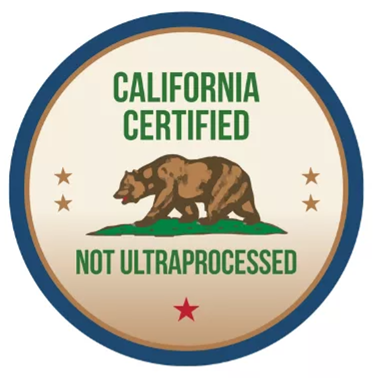
WHAT HAPPENED: The California Legislature this week passed Assembly Bill 2244 (AB 2244), which would establish a first-of-its-kind state certification seal for food products that meet standards for not being “ultra-processed.” The bill, authored by Assembly Member Jesse Gabriel (D-Encino), passed unanimously, with a 32-0 vote in the Senate and a 72-0 vote in the Assembly, before the Legislature closed its regular session for the year.
WHAT IT WOULD DO: Modeled after the USDA Organic label, AB 2244 would create a voluntary certification program allowing qualifying manufacturers to display a “Non-Ultra processed Certified” seal on packaging. The California Department of Public Health (CDPH) would oversee the program, appointing accredited certification agents no later than June 1, 2029 to review manufacturer applications and monitor compliance.
The bill would also require large grocery retailers — those selling more than 25 individual non-UPF-certified product types and generating more than $10 million in annual sales — to make certified products clearly identifiable in-store, through signage, physical separation, or other visual cues. A Public Health Food and Nutrition Education Fund would be established, funded by certification agent registration fees, to support implementation and consumer education.
HOW UPFs ARE DEFINED: The bill broadly defines UPF as any food or beverage containing one or more ingredients with a “specific technical effect,” including surface-active agents, stabilizers and thickeners, propellants, colors, and emulsifiers, among others. Products containing dyes, flavor enhancers, non-sugar sweeteners, and certain other additives would not qualify for the seal.
WHY IT MATTERS: AB 2244 would be the first state-level, government-backed certification program of its kind for non-ultra-processed foods. While the bill applies only in California, the state’s prior UPF-related legislation has prompted similar bills in other states, raising the prospect that AB 2244 could serve as a model nationally.
NCC’s TAKE: While AB 2244 is a state matter rather than a federal one, NCC has strong concerns with any effort to define or classify foods as “ultra-processed” or not, including at the state level. As outlined in NCC’s October 2025 comments to FDA and USDA, NCC believes process-based classification systems — including the NOVA framework that underlies much of the current UPF discourse — are scientifically flawed and misleading. Such systems ignore nutrient density and protein quality, apply inconsistently even among trained nutrition professionals, and lump nutritionally disparate foods together based solely on how they are made rather than what they contain. A breaded chicken tender, which delivers high-quality, complete protein along with iron, zinc and B-vitamins, is treated the same as candy or soda simply because both meet a “processed” threshold. NCC continues to urge policymakers to center any food policy on nutritional composition, not processing method, and cautions that classification schemes like AB 2244’s could stigmatize affordable, nutrient-dense foods that millions of families, schools and food assistance programs rely on.
WHAT’S NEXT: The bill heads to Governor Gavin Newsom, who has until September 30 to sign or veto it; he is expected to sign.