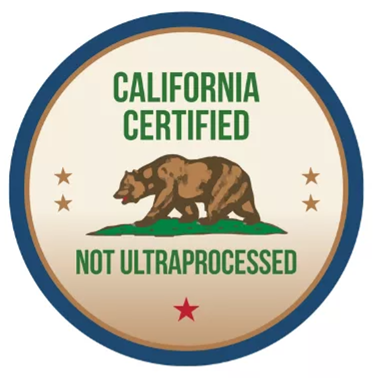
WHAT HAPPENED: Governor Gavin Newsom last week signed AB 2244 into law, creating a state “Non-Ultraprocessed Certified” label for foods that meet California’s standard for non-ultraprocessed foods (UPFs). The bill passed both chambers of the Legislature unanimously last month. It was authored by Assemblymember Jesse Gabriel (D-Encino) and co-sponsored by the Environmental Working Group.
HOW IT WOULD WORK: The seal is voluntary for manufacturers and modeled on the USDA Organic label. The California Department of Public Health (CDPH) will oversee the program, and food manufacturers will apply to accredited certification agents to use the seal.
WHAT QUALIFIES: Products containing chemical additives, synthetic dyes, flavor enhancers or nonnutritive sweeteners do not qualify for the seal. Products classified as “ultraprocessed food of concern” or “restricted school food” are also ineligible. Large grocery chains with more than $10 million in annual sales that carry at least 25 certified product types must make those items stand out through signage or physical separation.
WHY IT MATTERS: AB 2244 is the first state-backed certification program of its kind, and it takes effect while federal regulators are still working on their own definition. HHS and USDA recently sent the federal government’s first proposed UPF definition to the Office of Management and Budget for review but have not released specific ingredient thresholds or processing standards. Meaning individual states are createng UPF certification programs while the federal government is still defining the term. Food manufacturers selling nationwide may have to meet different requirements state by state.
NCC TAKE: NCC opposes any government effort to define or classify foods as “ultraprocessed,” at the state or federal level. As outlined in NCC’s October 2025 comments to FDA and USDA, processing-based classification is scientifically flawed and misleading to consumers. It groups nutritionally dissimilar foods based on how they are made rather than what they contain, ignores nutrient density and protein quality, and is applied inconsistently. A state-backed seal that signals some foods as “healthier” based on processing risks stigmatizes affordable, nutrient-dense foods that millions of families, schools and nutrition assistance programs rely on.
WHAT’S NEXT: CDPH must accredit certification agents by June 1, 2029, before any products can carry the seal. At the federal level, the HHS-USDA proposed UPF definition remains under OMB review. NCC will continue to engage as both the federal definition and state-level efforts move forward.