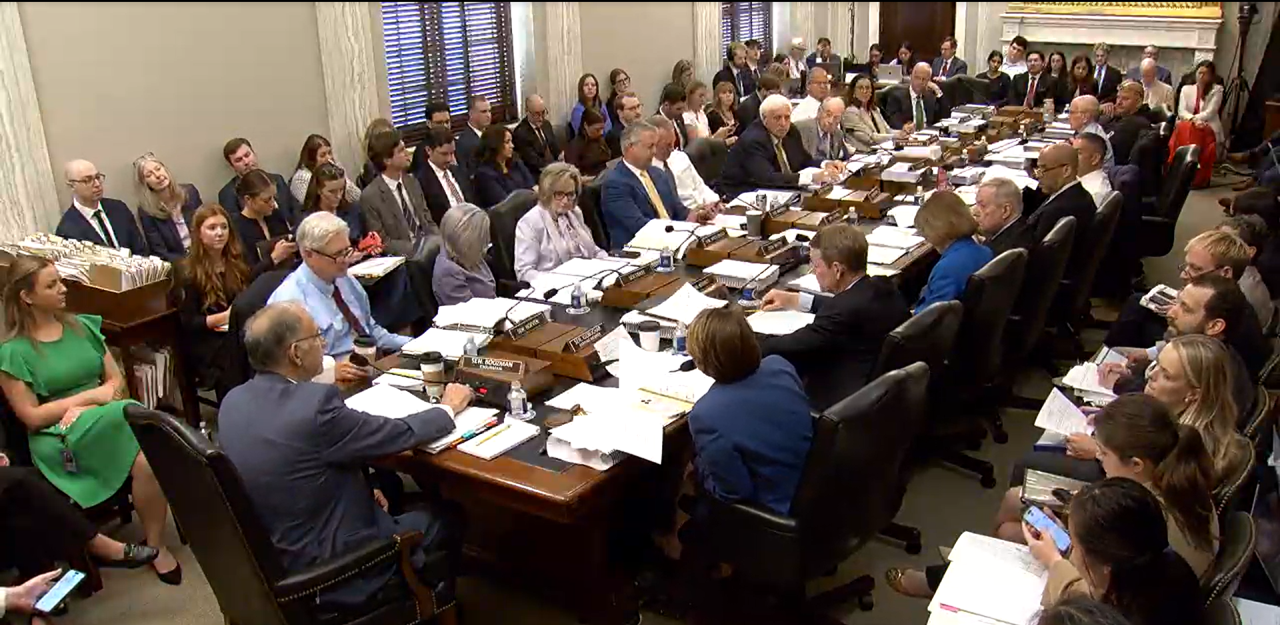
The Senate Ag Committee marks up the Farm Bill in August
WHAT HAPPENED: With Republicans set to give up control of both chambers in January, GOP leaders are trying to get a five-year farm bill done in the lame-duck session. “Obviously, there are a lot of things out there that need to be done. I’d like to figure out a pathway to get the farm bill done,” Thune told reporters on Monday. He also cautioned that passage would depend on “what we have the votes to do and then the time on the clock to do.” The House passed a farm bill 224 to 200 in April. The Senate Agriculture Committee passed a farm bill on a party-line vote in September. To pass the Senate, the bill will need 60 votes, meaning at least 10 Democrats would be needed to move it forward.
WHY IT MATTERS: There are several provisions in the bill that would positively impact chicken producers, including adding hot rotisserie chicken to the SNAP program, provisions for poultry health and disease monitoring programs, support for broiler exports, and natural disaster assistance.
WHAT’S NEXT: The main sticking point is about how long states get before they must help pay for SNAP benefits. Senate Ag Chairman John Boozman says a one-year postponement is the final offer, while the panel’s top Democrat, Sen. Amy Klobuchar, says at least a two-year delay is needed. There is precedent for a lame-duck deal: in 2018, Democrats flipped the House, and the Republican-controlled Congress passed the 2018 farm bill in December during the lame-duck session. Boozman says he believes there’s enough time to get the bill across the finish line by year’s end. Congress is scheduled for roughly five weeks of lame-duck work before adjourning on December 18. Both chambers are out of session for the week of Thanksgiving. If no deal comes together, the farm bill will pass to a Democratic-led Congress and new Agriculture Committee leadership in January.