The USPOULTRY Board of Directors gathered in beautiful Coeur d’Alene, Idaho, June 25-27, for their summer board meeting. Thank you, USPOULTRY, for including NCC to help collaborate on initiatives that will continue moving the poultry industry forward. It was business by day and Idaho adventures in between.
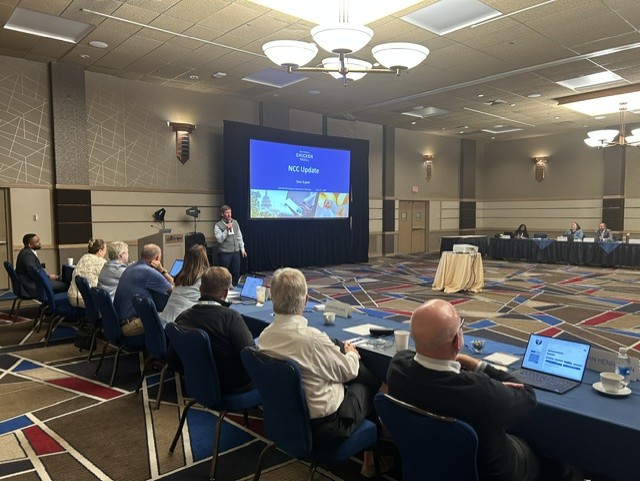
Tom Super, NCC SVP of Communications, speaks to the USPOULTRY Board about opportunities for collaboration, generative artificial intelligence and other public affairs and communications issues in the poultry industry

The welcome reception and dinner was held on the front lawn of the Coeur d’Alene Resort. Members and guests watched the World Cup match between USA and Turkey on a screen outside.

The par-3 14th hole at The Coeur d’Alene Resort Golf Course, featuring the first and only floating, movable island green. The 2,200-ton, 15,000-square-foot island uses an underwater cable system to change position daily. Source: The Coeur d’Alene Resort

The ferry ride to the 14th green. L-R: Thomas Super; Tom Super, NCC; Brian Roberts, Case Farms; West Roberts. We won’t say who hit the green and who didn’t.

Celebrating America’s 250th
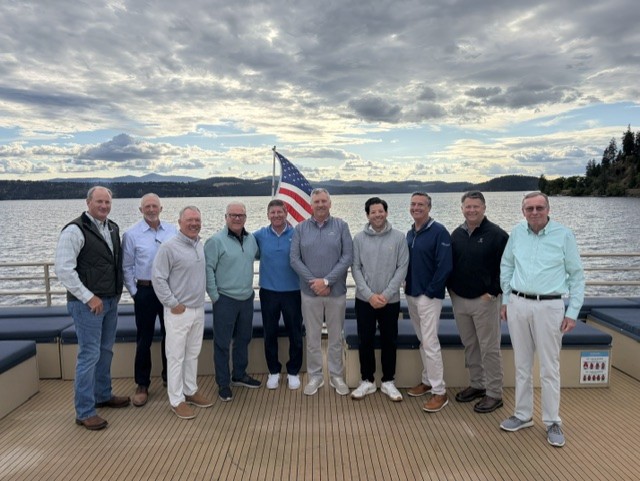
The closing reception & dinner was a lake cruise aboard the Mish-an-Nock. NCC members gathered for a photo. L-R: Mikell Fries, Claxton; Joel Sappenfield, Simmons; John Wright, Fieldale; Bernard Leonard, Tyson (retired) and former NCC Chair; Tom Super, NCC; Kevin McDaniel, Wayne-Sanderson and current NCC Vice Chair; Tim Stiller, Foster Farms; Bill Griffith, Peco and NCC Immediate Past Chair; Brian Roberts, Case; and Monty Henderson, George’s (retired)
This Fourth of July marks 250 years of American independence. We’re grateful for the farmers, workers, and families who help fuel the cookouts and backyard celebrations — one wing and drumstick at a time. From all of us at NCC, Happy 4th — and Happy 250th, America! #ChickenUSA

WHAT HAPPENED: The Supreme Court on Thursday cleared the way for the Trump administration to remove legal protections from thousands of Haitian and Syrian immigrants in the United States, meaning they could be subject to deportation. The decision, in Mullin v. Doe (Nos. 25-1083 and 25-1084), was decided June 25. The question before the Court was whether challengers to the termination of Temporary Protected Status (TPS) for nationals from Syria and Haiti were entitled to orders postponing the terminations during litigation. The Court ruled they were not. The Court also rejected a claim that the decision to remove protections for Haitians was discriminatory. Last year, the Supreme Court in two separate decisions allowed the Trump administration to revoke the same kind of legal status from 600,000 Venezuelans in the U.S.
WHY IT MATTERS: TPS provides work authorization to nationals from designated countries experiencing conflict or humanitarian crises, and TPS holders are employed across a range of U.S. industries, including food and agriculture. The ruling follows the administration’s broader effort to wind down TPS across multiple nationalities — DHS has moved to terminate protections for nationals of Nepal, Honduras, Nicaragua, Venezuela, Haiti, and other countries, affecting hundreds of thousands of workers.
WHAT’S NEXT: Attorneys representing TPS holders are analyzing the Court’s findings to decide on next steps. NCC will continue to monitor developments as the administration implements the ruling and as litigation on related TPS designations continues in the lower courts.
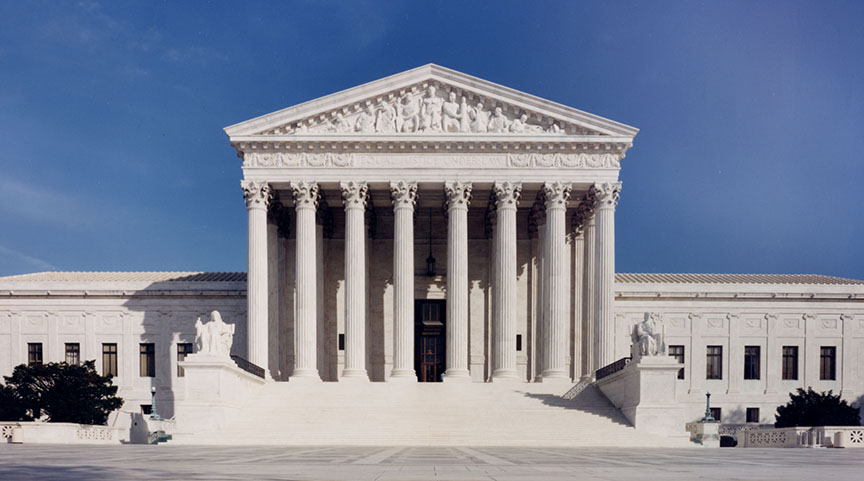
Source: The Supreme Court
WHAT HAPPENED: A coalition of 17 states filed suit against California this week seeking to block enforcement of the state’s Plastic Pollution Prevention and Packaging Producer Responsibility Act, passed by Gov. Gavin Newsom in 2022. The lawsuit argues the law violates both the U.S. and California constitutions, and asks the court to declare it invalid and unenforceable.
WHO IS INVOLVED: Nebraska leads the coalition, joined by Alabama, Florida, Georgia, Idaho, Indiana, Iowa, Louisiana, Missouri, Montana, North Dakota, Oklahoma, South Carolina, South Dakota, Texas, Utah, and West Virginia. The National Association of Wholesaler-Distributors also joined the suit.
WHY IT MATTERS: The law sets the nation’s strictest requirements for plastic packaging, requiring producers to reduce single-use plastics by 10% by 2027 and 25% by 2032, and mandating that plastic packaging be recycled at a rate of 65% by 2032. The plaintiffs argue that California’s rules would effectively force businesses nationwide — including food and agriculture companies — to overhaul their products and packaging operations to comply with a single state’s regulatory regime. Chicken processors and their suppliers rely on plastic packaging throughout the supply chain, from retail tray packs to food service formats, and a ruling upholding California’s law could have significant compliance implications across the industry.
WHAT’S NEXT: The lawsuit names as defendants the director of California’s recycling agency CalRecycle and the Circular Action Alliance, the nonprofit tasked with implementing the law. A separate legal challenge has also been filed by environmental groups who argue the final regulations were too weak. NCC will monitor the litigation and its potential implications for poultry packaging requirements.
While we are 100% behind the U.S. Men’s National Team, we kind of like France’s team uniform.