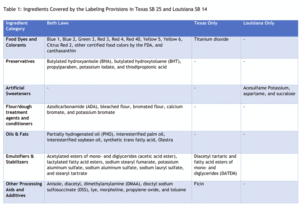
A new study estimates new ingredient bans and labeling laws in three states will have short-term costs of at least $13.4 billion, with annual costs moving forward of over $12 billion. The study was commissioned by Americans for Ingredient Transparency, a coalition of food industry groups, and conducted by Policy Navigation Group. It found that new laws being enacted in Louisiana, Texas and West Virginia could require consumers in those states to pay a combined $17.1 billion more per year on groceries, or around 12 percent more. For the average U.S. family, that increase is nearly $860 more per year.
Louisiana, Texas, and West Virginia have recently passed laws that ban or mandate disclosures of already-regulated ingredients in foods and that restrict certain ingredients in school meals. These mandates will cost consumers, businesses, and local governments billions of dollars per year in extra grocery costs, in compliance costs, and in greater spending for school meals, the report says.
To carry out some of the new labeling laws, the report estimates food producers will spend approximately $900 million in the first few years redesigning labels and packaging. It also estimates an additional $3 to $4 billion in testing costs for retailers to defend themselves against lawsuits.