U.S. total broiler slaughter data for the week ending August 29, 2026, is estimated by USDA’s Poultry Market News Service to be 171,708,000 broilers, a 3-percent decrease from the same week a year earlier.
The 3-percent decrease in slaughter compares with a 1-percent increase in eggs set in the United States, 10 weeks earlier, and no change in chicks placed 7 weeks earlier in the United States. USDA’s latest Broiler Hatchery report can be viewed here.
| U.S. Eggs Set, Chicks Placed, Broiler Slaughter Report | ||||||||||
| Week ending | Eggs set | Chicks placed | Eggs set | Chicks placed | Broilers slaughtered | |||||
| change from | change from | 10 weeks previous | 7 weeks previous | |||||||
| 1 year | 1 year | 1 year | 1 year | 1 year | ||||||
| -000- | % | -000- | % | -000- | % | -000- | % | -000- | % | |
| Jul | ||||||||||
| 18 | 252,493 | 101 | 195,455 | 101 |
255,377 | 102 | 197,500 | 102 | 171,980 | 100 |
| 25 | 253,586 | 102 | 194,607 | 100 |
256,660 | 102 | 198,472 | 103 | 173,011 | 102 |
| Aug | ||||||||||
| 1 | 252,434 | 101 | 194,575 | 101 |
256,395 | 102 | 198,318 | 102 | 172,471 | 100 |
| 8 | 250,870 | 101 | 195,714 | 101 |
257,558 | 102 | 198,971 | 102 | 172,664 | 101 |
| 15 | 250,304 | 100 | 196,484 | 102 |
257,097 | 102 | 198,693 | 102 | 172,776 | 101 |
| 22 | 251,923 | 101 | 195,035 | 101 |
254,493 | 101 | 197,202 | 101 | 174,016 | 100 |
| 29 | 250,686 | 101 | 194,367 | 100 |
252,943 | 101 | 195,611 | 100 | 171,708 | 97 |
| Sep | ||||||||||
| 5 * | — | — | — | — |
252,451 | 101 | 195,455 | 101 | — | — |
*Labor Day Holiday Weekend
The staff at the National Chicken Council wishes you a happy Labor Day Weekend! THANK YOU to the men and women of the chicken industry who work every day to produce America’s favorite protein!
WHAT HAPPENED: On August 11, 2026, the U.S. Food and Drug Administration (FDA) issued a proposed rule that would convert the current voluntary Generally Recognized as Safe (GRAS) notification program into a mandatory one. Under the proposal, any company introducing a human or animal food substance into interstate commerce under the GRAS provisions of the Federal Food, Drug, and Cosmetic Act would be required to submit a GRAS notice to FDA explaining the basis for its safety conclusion — including substances that come into contact with food, such as conveyor belts, shipping containers, and packaging.
HISTORY: The current voluntary framework, finalized in 2016, has allowed but not required companies to share their supporting GRAS data with FDA. The new proposal stems from a March 2025 directive from HHS Secretary Robert F. Kennedy Jr. as part of the Administration’s Make America Healthy Again initiative, aimed at giving FDA greater visibility into substances entering the food supply.
WHAT ELSE IS IN IT: For substances already on the market, the rule would create a time-limited, streamlined submission option (open for one year after the final rule’s effective date) allowing companies to submit basic information about a substance and its conditions of use rather than a full GRAS notice. The proposal also outlines seven exceptions to the mandatory notification requirement, including substances covered by an existing FDA “No Questions” letter and food ingredients of natural biological origin that were commonly consumed in the U.S. without known adverse effects prior to January 1, 1958.
WHY IT MATTERS: If finalized, this rule would represent a significant shift in how food substances are brought to market, moving away from a system that has allowed companies to self-determine GRAS status without FDA review. Companies would need to assess their full ingredient and packaging portfolios — including materials that contact food during processing — to determine which substances require notification. Failure to notify would not automatically deem a product adulterated, but FDA has signaled it would factor a lack of notification into post-market review and enforcement priorities, including warning letters and seizures.
WHAT’S NEXT: Industry stakeholders should review the proposed rule and consider submitting comments before the December 9, 2026 deadline. NCC is reviewing the proposal’s implications for the chicken industry and will be preparing comments. A detailed legal analysis of the rule is available from Hogan Lovells Cadwalader by clicking here.
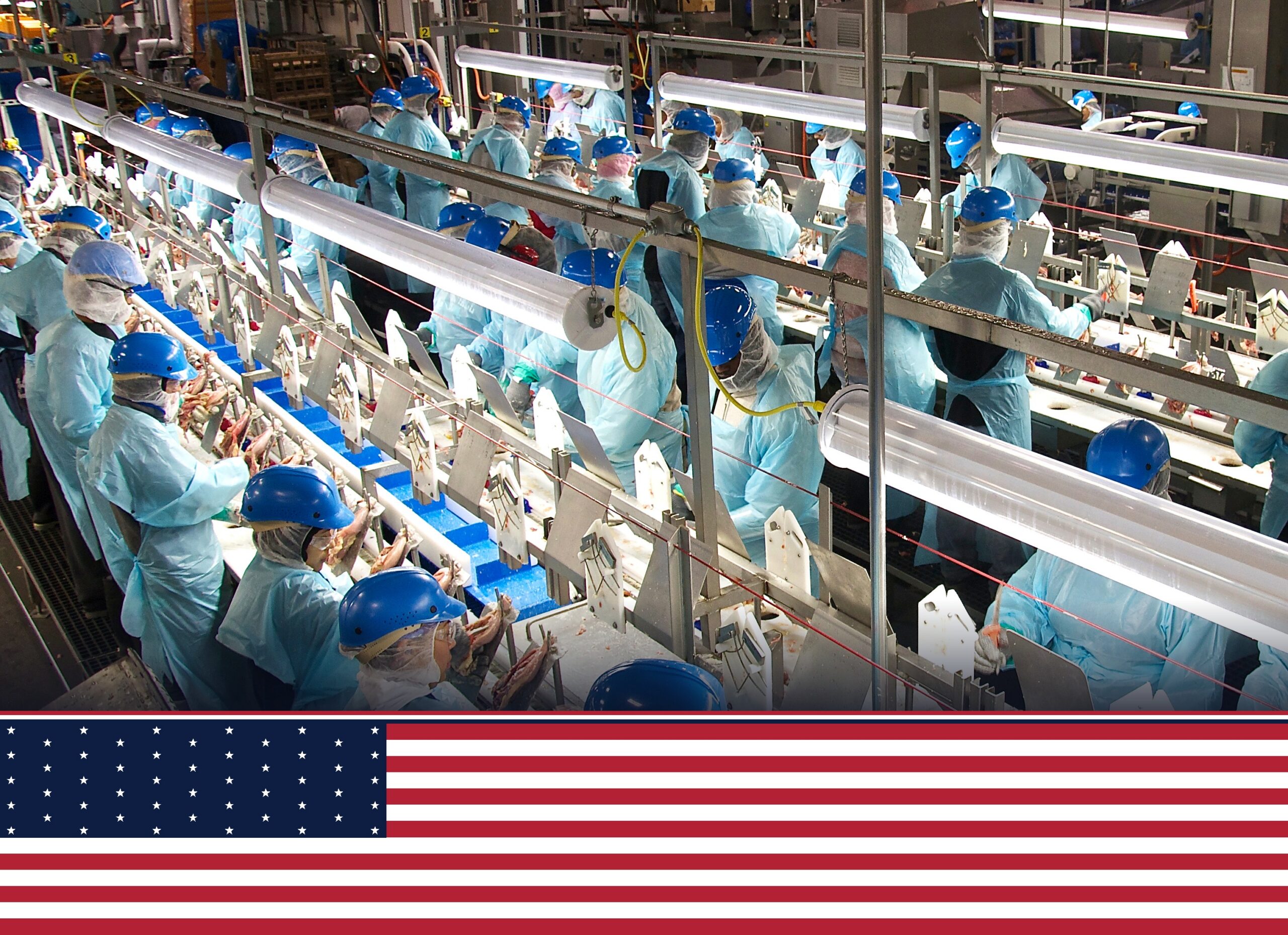
WHAT HAPPENED: The Joint Poultry Industry Safety & Health Council recognized a record 272 chicken and turkey facilities for outstanding safety performance at the 2026 National Safety Conference for the Poultry Industry, held in Destin, Fla. The awards were based on injury statistics from a three-year period (2023–2025) and written applications reviewed by academic and industry safety experts.
WHAT WAS THE BREAKDOWN: Of the honorees, 81 facilities received the highest level of recognition — the Award of Distinction — for maintaining injury and illness rates at least 75% lower than Bureau of Labor Statistics (BLS) averages, alongside excellence in safety training and employee involvement. Another 113 facilities earned the Award of Honor (incident rates 50–75% lower than BLS averages), and 78 facilities received the Award of Merit (rates equal to or up to 50% lower than BLS averages).
WHAT THEY’RE SAYING: “Safety is not simply a metric, a program or something we measure at the end of the year,” said Rick Hellinga, senior director of Safety, Health and Loss Prevention at Simmons Foods and chair of the Joint Poultry Industry Safety & Health Council. “It is a responsibility we share every day, and it is reflected in how we work and how we care for the people who do that work. Recognizing a record 272 facilities this year is an outstanding achievement.”
WHY IT MATTERS: The Joint Industry Safety & Health Council — made up of members from the U.S. Poultry & Egg Association, National Chicken Council, and National Turkey Federation — represents companies producing 95% of the nation’s poultry products and directly employing more than 350,000 workers. This year’s record number of recognized facilities underscores the industry’s sustained investment in workplace safety and reinforces the sector’s broader narrative around employee well-being.